




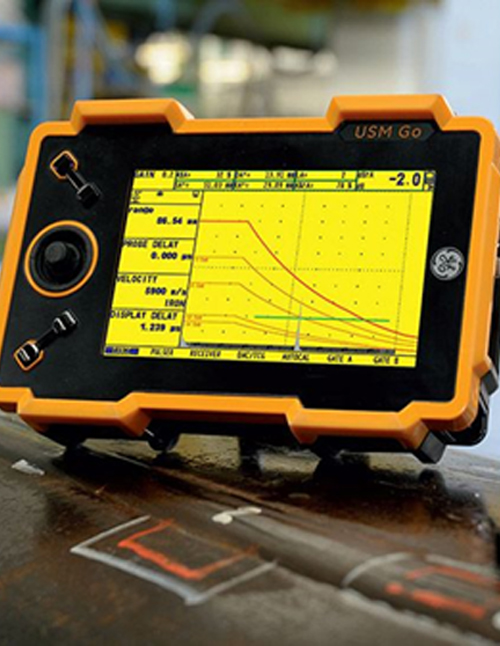
At Goodwill Engineering & Inspection, our Conventional Non-Destructive Testing (NDT) services form the foundation of our quality and integrity assurance solutions. We specialize in proven inspection techniques such as Radiographic Testing (RT), Ultrasonic Testing (UT), Magnetic Particle Testing (MT), Liquid Penetrant Testing (PT), and Visual Testing (VT), which are essential for identifying discontinuities in materials and welds without compromising the integrity of the components. These methods are widely applied across industries including oil & gas, power generation, construction, and manufacturing, ensuring structural integrity, compliance, and operational safety. Our inspections are carried out by skilled and certified NDT Level II and III professionals who adhere strictly to international codes and standards. With a strong focus on reliability, safety, and precision, we help clients reduce risk, improve product quality, and meet regulatory requirements. Supported by our ISO 9001, ISO 14001, and ISO 45001 accreditations, Goodwill Engineering & Inspection ensures that each conventional NDT service is delivered with uncompromised professionalism and technical excellence.
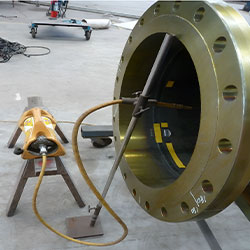
Radiographic Testing (RT) [X- & Gamma-Rays]
- Weldments, castings, forgings & tubes
- Pipelines, storage tanks & pressure vessels
- Electronic, electrical & mechanical components
- Structural Steel
.jpg)
Ultrasonic Testing (UT)
- Flaw detection in welds, castings, forgings, plates
- Bars, tubes & machine components
- Thickness measurement
- Material characteristic through acoustic attenuation
.jpg)
Liquid Penetrant Testing (LPT)
- Surface discontinuities: crack, pinholes, laps & seams on non-porous & non-absorbing materials
- Flaws in weldments, joints, tubings & castings
.jpg)
Magnetic Particle Testing (MT)
- Surface & subsurface discontinuities in ferromagnetic materials
- Suitable for forgings, weldments, shafts, components
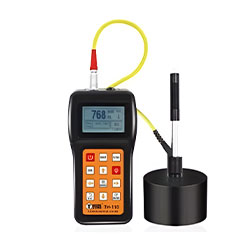
Hardness Testing
The Brinell hardness test method consists of indenting the test material with a 10 mm diameter hardened steel or carbide ball subjected to a load of 3000 kg. For softer materials the load can be reduced to 1500 kg or 500 kg to avoid excessive indentation. The full load is normally applied for 10 to 15 seconds in the case of iron and steel and for at least 30 seconds in the case of other metals. The diameter of the indentation left in the test material is measured with a low powered microscope. The Brinell harness number is calculated by dividing the load applied by the surface area of the indentation.
.jpg)
Postweld Heat-Treatment (PWHT)
Post-weld heat treatment is most generally used for stress relief. The purpose of stress relieving is to remove any internal or residual tresses that may be present from the welding operation. Stress relief after welding may be necessary in order to reduce the risk of brittle fracture, to avoid subsequent distortion on machining, or to eradicate the risk of stress corrosion.

Fast Turnaround
We provide our Conventional NDT services with a quick and efficient turnaround time to minimize your operational downtime.

Conventional Methods
We utilize proven inspection techniques such as RT, UT, MT, PT, and VT to detect flaws and ensure material integrity without causing damage.

Experienced Technicians
Our team includes highly skilled and certified NDT professionals with extensive experience in diverse industries.